
Blog · 9 November 2026 · 2 min read
Memory doesn’t arrive whole
We don't remember in complete scenes. We keep pieces: a texture, a colour, the weight of a room. A note on why the work is built from fragments.
By Nuno Alecrim

We don't remember in whole scenes. Memory in fragments is closer to how it really works: a texture, a colour, the weight of a room, a sentence without the conversation around it.
What memory keeps
Nuno Alecrim thinks of memory as everything we live, learn and absorb. It builds who we are and shapes what draws us, often without us knowing why. It works like a camera, or a sponge: it takes in more than we notice.
But it doesn't give things back in order. It isn't linear. What returns is partial: an edge, a shadow, a colour that was next to something else. The rest has gone, or sits somewhere we can't reach.
That is where his work starts. Not from a memory as a story, but from what is left of it.

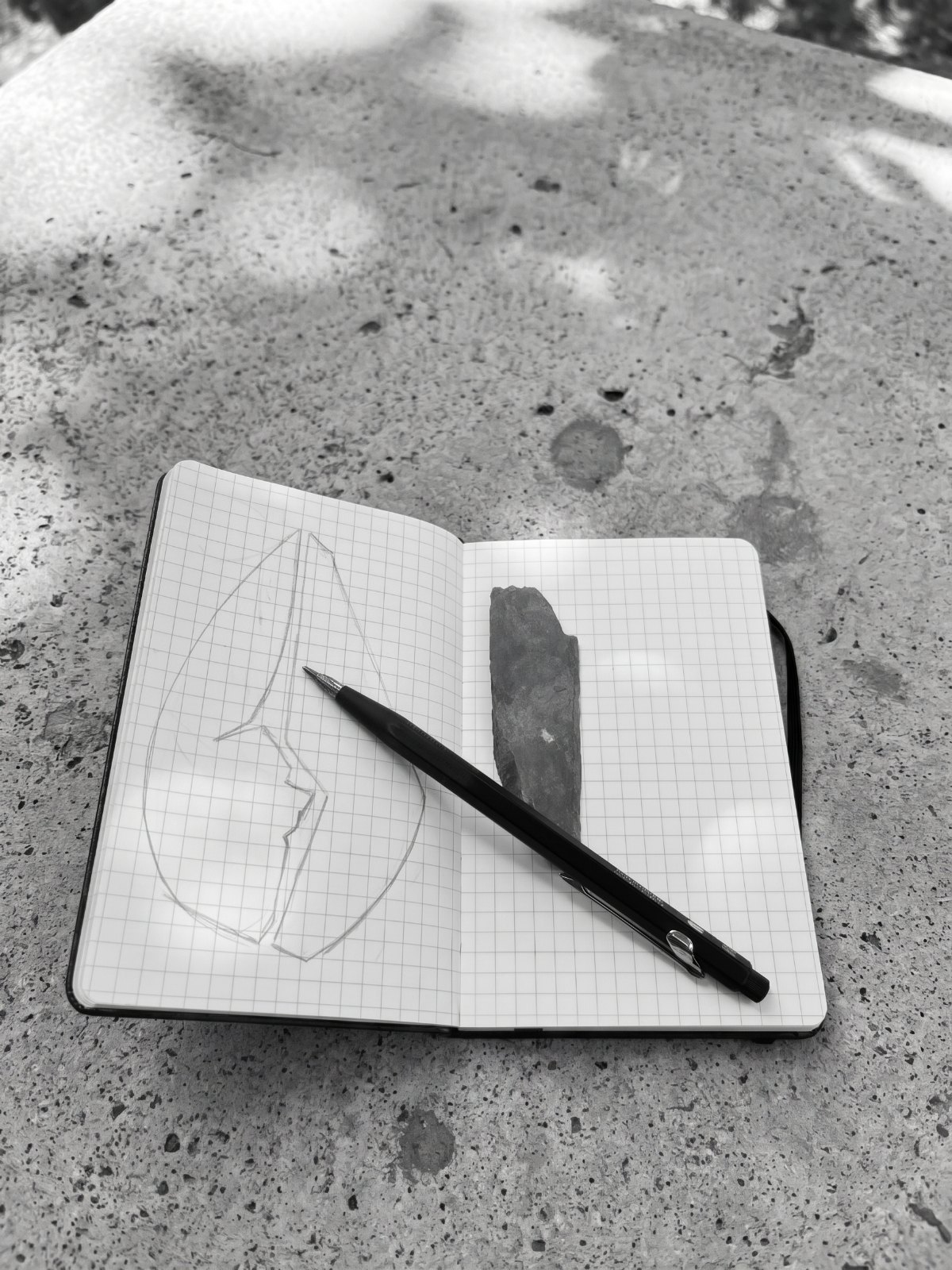

Remembering is rebuilding
Psychology has known this for almost a century. In 1932 the British psychologist Frederic Bartlett asked people to read a Native American legend, The War of the Ghosts, and retell it, one person to the next. The outline survived. The details did not: unfamiliar parts dropped out, others changed to fit what each listener already knew. Bartlett called remembering “an imaginative reconstruction, or construction”.
Every time we remember, we rebuild from pieces. The work does the same, in the open.

Structure first, then the surface
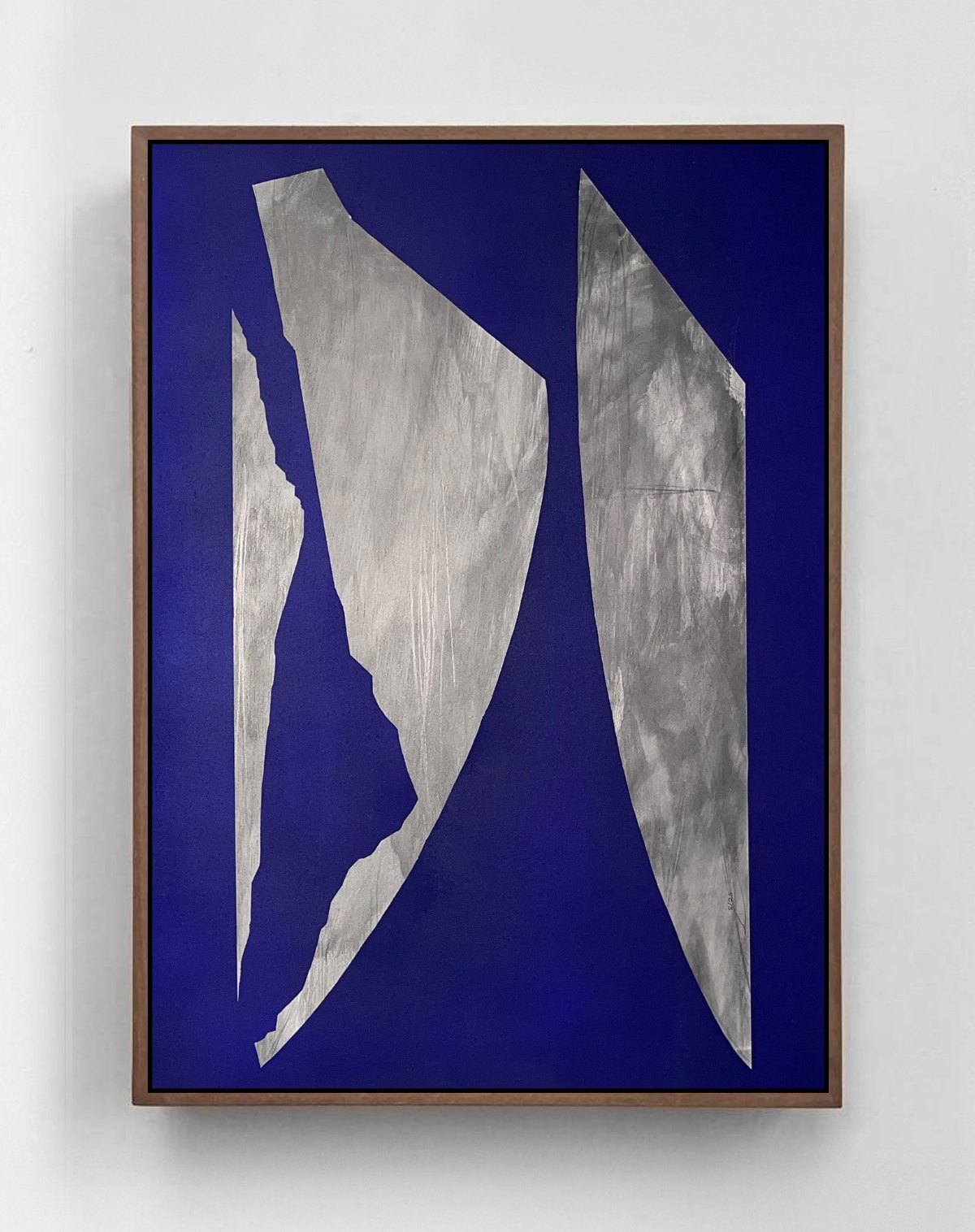
His background in graphic design still shapes the way he works as a visual artist. He looks at balance, at the weight of each element, at framing and the space between elements. The compositions are built with attention to detail; nothing sits where it does by accident.
Intuition comes later, in the surface: in the textures, and in how the material goes on. That is where control loosens and the work starts answering back.
Fragments of a graphic mind.
What is thrown away
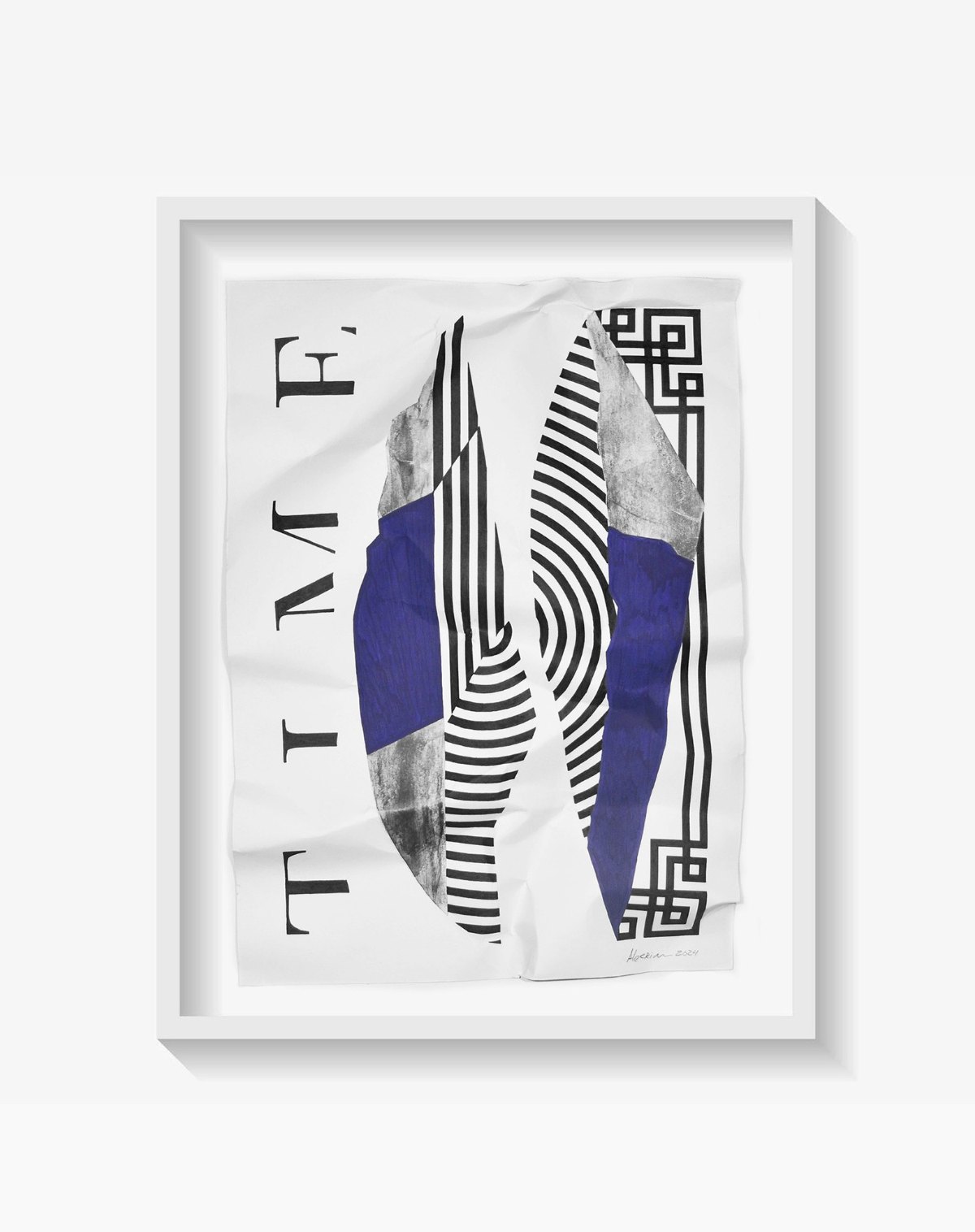
Throw Back began with a sheet from a cancelled project, crumpled and discarded. That surface became the start of something else. The creases stayed: what was meant to be thrown away became the structure of the work. See the work.
A story in a fragment
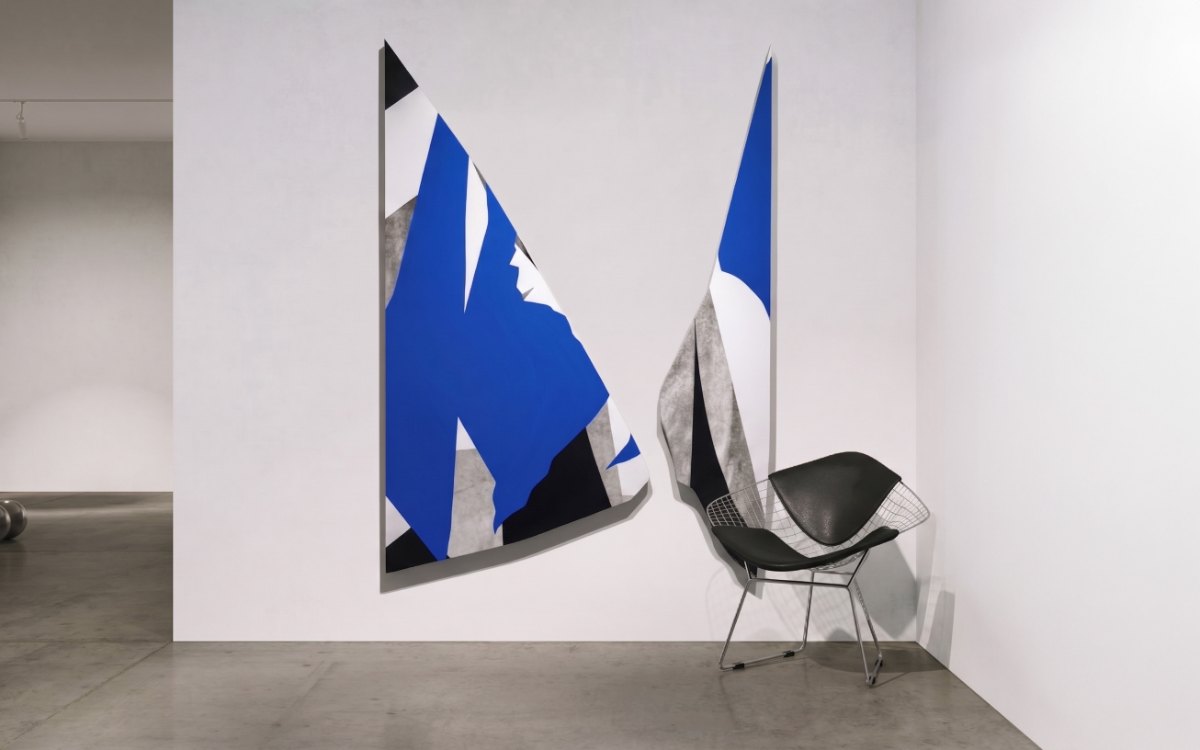
The work doesn’t illustrate a memory. It doesn’t tell you what happened, or what to feel. It holds pieces that coexist without resolving into a single narrative, the way thoughts sit next to each other before they come to a conclusion.
What you bring to it is yours. Which of your own fragments do you find?
New posts and new work go out first in the newsletter.